Walks & Gear · 3 min read
Winter Walk Gear Checklist
Shorter days, slick sidewalks, cold paws. Here's what to have by the door when winter arrives.
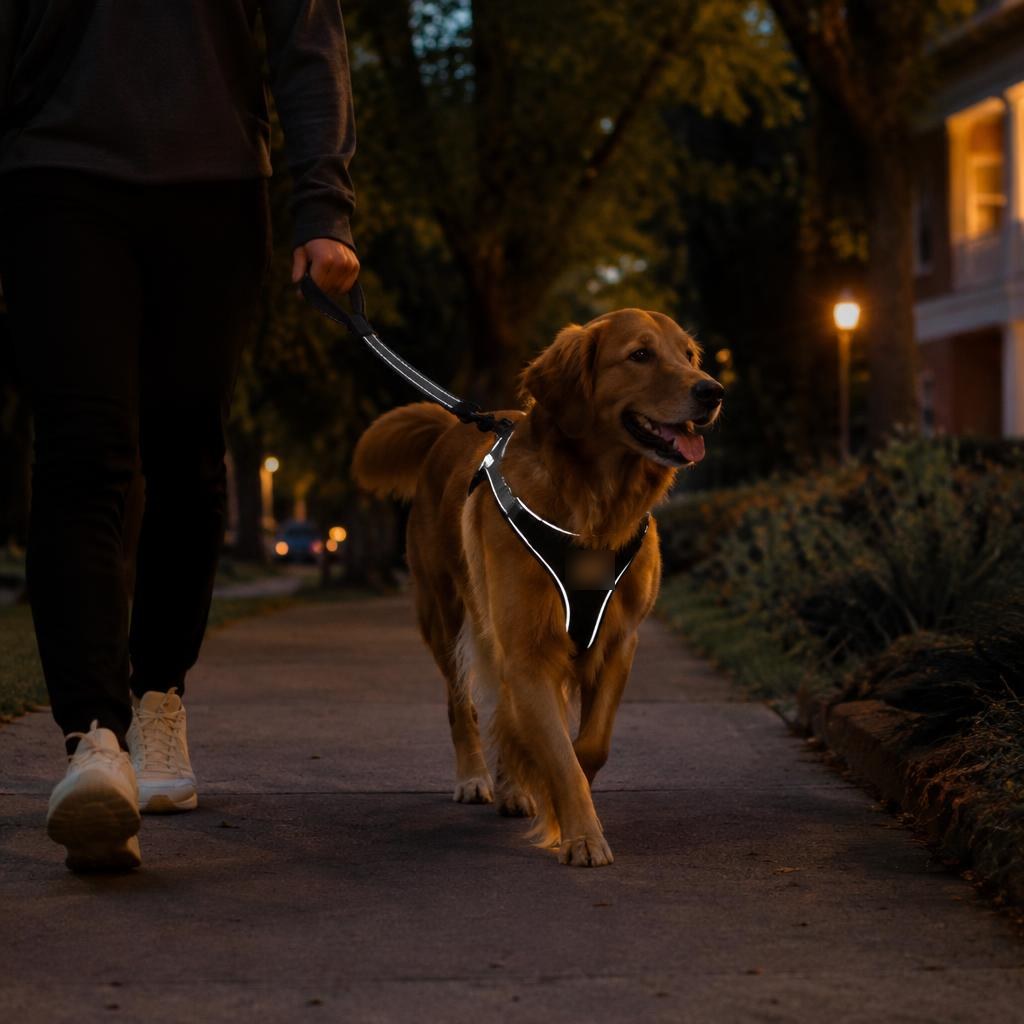
Winter walks have their own magic — crisp air, quiet streets, the crunch of snow under four paws. They also come with a few extra challenges: darker evenings, icy sidewalks, salted roads and dogs who suddenly look very unsure about leaving the warm house.
This checklist covers the gear and habits that make winter walks safer and more comfortable. Not every dog needs every item. A thick-coated husky and a short-haired whippet have very different needs, so pick what makes sense for yours.
1. Be seen in the dark
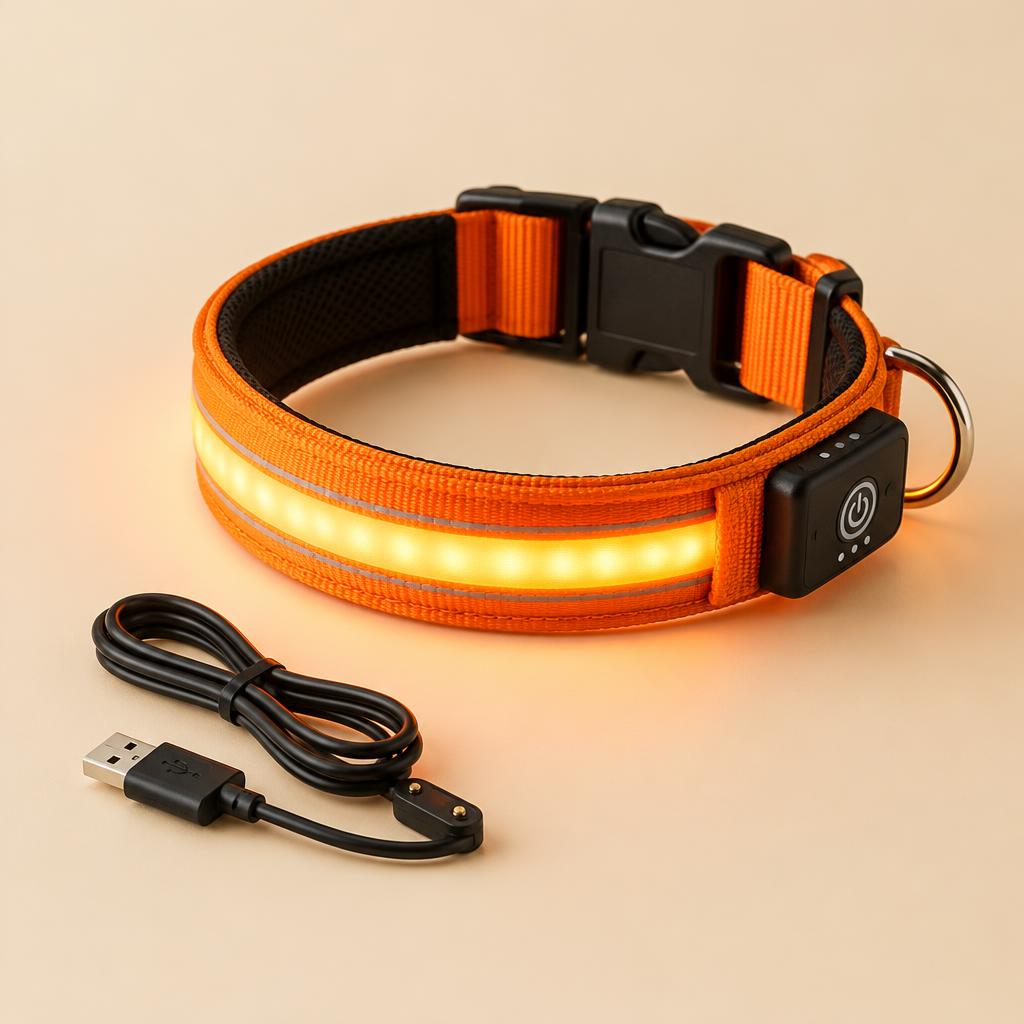
In many places, winter means both the morning and evening walks happen in low light. Visibility is the single most important upgrade. A rechargeable LED collar makes your dog easy to spot from a distance, and recharging means you're not hunting for batteries on a dark morning.
Add reflective gear for you, too — a reflective strip on your jacket or a headlamp lets drivers see the whole team. A reflective harness doubles up on visibility for your dog.
2. A layer for dogs who need one
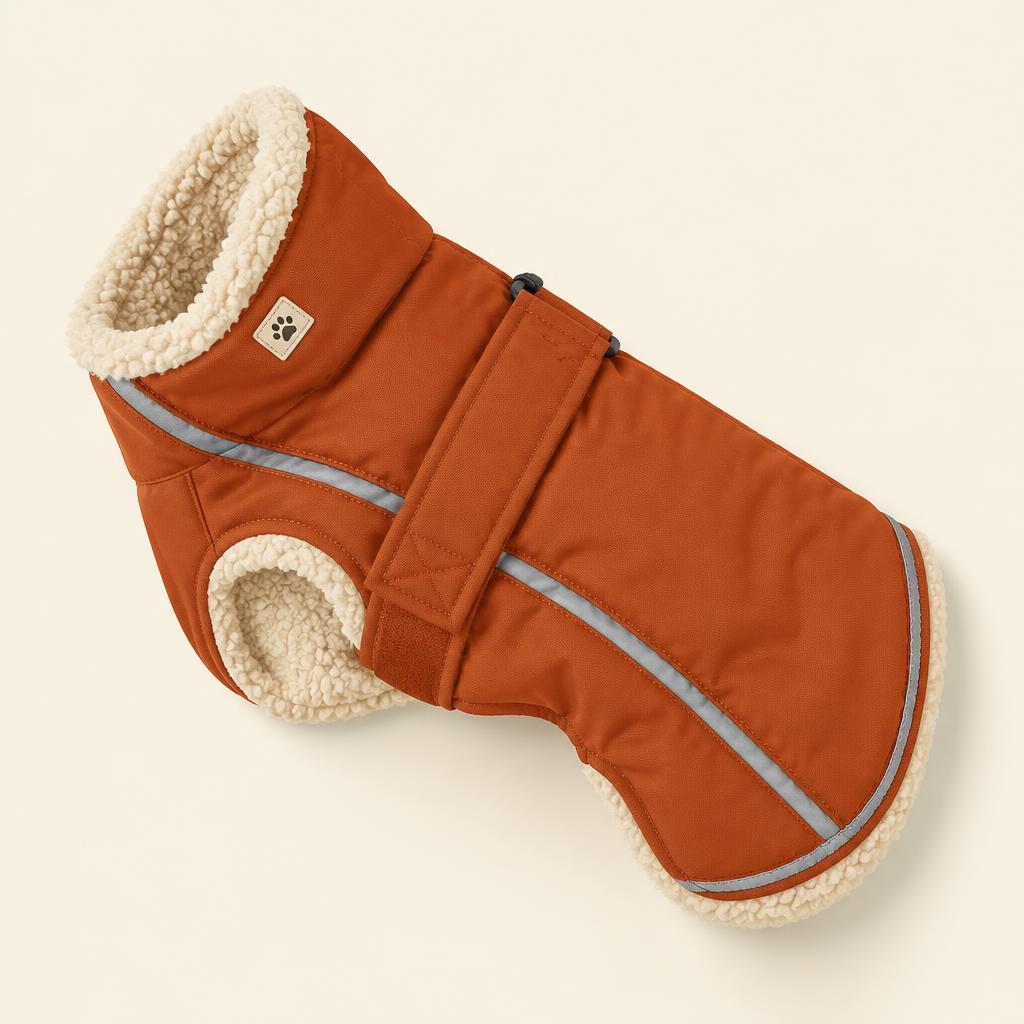
Small dogs, short-coated breeds, seniors and lean dogs often feel the cold more. If your dog shivers, lifts their paws or tries to turn back toward home, they may appreciate a coat. A reflective winter jacket adds warmth and visibility in one layer.
Fit matters. Measure back length, chest and neck and check the size chart — a jacket should cover the back and chest without rubbing under the front legs. Introduce it indoors first with treats so it feels normal before the first cold walk.
3. Paw care for salt and ice
Ice-melt salt and grit can irritate paw pads, and snow can ball up between toes on furry feet. After every winter walk, clean and dry your dog's paws, especially between the toes. A paw cleaner with lukewarm water rinses away salt quickly. Pat dry thoroughly.
Some owners use dog boots or a paw balm before walks. If you try boots, introduce them gradually — most dogs walk like they're on the moon the first few times. Keeping the fur between pads trimmed short helps reduce snowballs.
4. Steady footing for you and your dog
Slippery sidewalks are tricky for both ends of the leash. A harness gives you better control than a collar if your dog slips or lunges. Keep the leash at a comfortable length, avoid wrapping it around your hand and take corners slowly.
For yourself, shoes with good grip or traction cleats make a big difference. You can't help your dog if you're busy keeping your own balance.
5. Adjust the walk itself
On bitterly cold days, several shorter walks may be kinder than one long one. Stick to cleared paths when you can, and skip frozen ponds and lakes entirely — ice can be thinner than it looks. Make up for shorter outings with indoor enrichment: Boredom Busters has easy ideas.
Keep an eye on your dog's comfort. Lifting paws, shivering, slowing down or seeking shelter are all signs it's time to head home.
6. The warm-up station at home
Set up the door for winter: a big absorbent mat, a towel within reach, the paw cleaner ready to go and a hook for wet jackets to dry. Wipe down your dog's belly and legs after slushy walks, and let wet coats dry fully before the next outing.
A cozy bed away from drafts gives your dog somewhere to warm up afterwards.
7. ID and essentials
Snow can hide familiar scents and make it easier for a dog to get disoriented if they slip their leash. Make sure your dog's tag is current and readable. Carry poop bags (they're easier to use before your fingers freeze), a small towel, and your phone charged.
The short version
Be seen, stay warm, look after paws and keep your footing. With the right gear by the door, winter walks can be some of the most peaceful ones of the year — and you'll come home with clean floors and a happy, slightly snow-dusted dog.
General tips from the TidyTails team, not veterinary advice. If you're worried about your dog's health or behavior, check in with your vet.
Make it easier
Gear for this guide